Kennebec Fact Sheet

| Kennebec (USDA Seedling # B70-5) |
 |
Parentage – USDA 96-56 (Chippewa x Katahdin) x B127 (3895-13 x Earlaine)1,2,3
Breeder – Released by the USDA and Maine Agricultural Experiment Station in 19482
Maturity – Late-season1,3
Usage –Excellent for boiling and baking1,2,3; ideal for chipping and French frying2,3
Plant – Large, spreading structure1,2; thick, green, prominently angled stems; slightly waved stem wings1,3
Leaves – Dark green, long, broad shape; four pairs of ovate, large primary leaflets; numerous secondary leaflets between primary leaflets; few to no tertiary leaflets; green petioles1,3
Flowers – Medium size, white with orange-yellow anthers1,3; abundant pollen1; flowers often abort before opening2
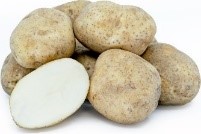
Tubers – Oblong to elliptical, smooth; creamy buff colored, thin skin1,2,3; white flesh; shallow creamy buff colored eyes with medium prominent eyebrows1,3; medium tuber maturity1,2; medium to high specific gravity1,2
Strengths – Widely adapted; produces high yield of US #1 grade tubers1,2,3; tubers readily detach from vines at harvest1; highly resistant to common races (R1 gene resistance) of late blight1,2 and to mild mosaic virus such as potato virus A and Y1
Weaknesses – Highly susceptible to Verticillium wilt and pink eye1,2,3; susceptible to common scab and Rhizoctonia3; moderately susceptible to potato leafroll virus but net necrosis symptoms not typically observed1,3; misshapen tubers may form under warmer growing conditions2
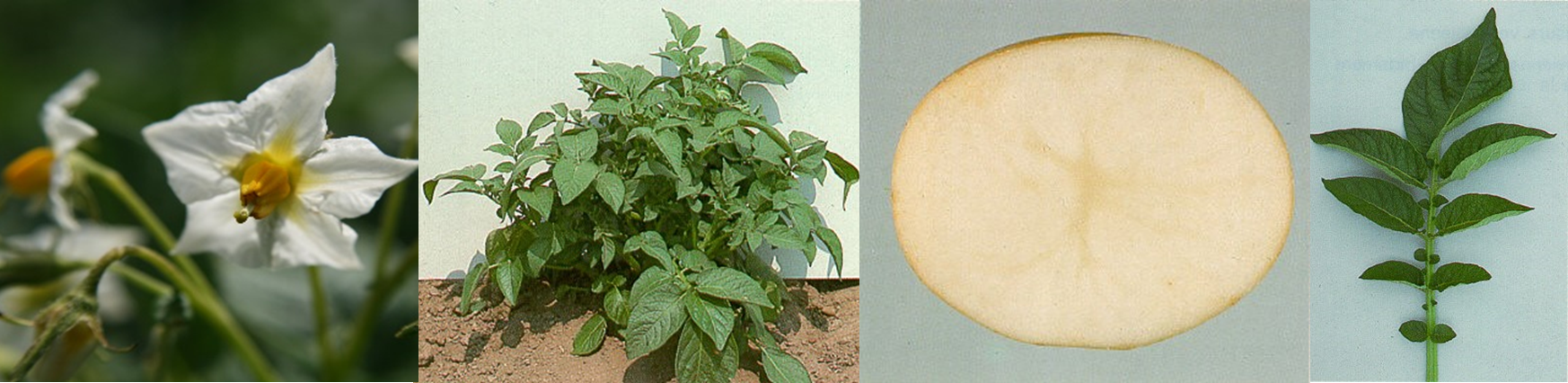 Photos1,4
References: 1Akeley R. V. et al. 1948. Kennebec: A New Potato Variety Resistant to Late Blight, Mild Mosaic, and Net Necrosis. American Journal of
Potato Research 25:351-361. 2https://www.potatoassociation.org/industry/varieties/white-varieties/kennebec-solanum-tuberosum
3http://www.inspection.gc.ca/plants/potatoes/potato-varieties/kennebec/eng/1312587385767/1312587385768 4 Justin Bula-Northern Sands Farms
Page 1 of 1
Last Revised: 8/24/22
© 2017 The Board of Regents of the University of Wisconsin System